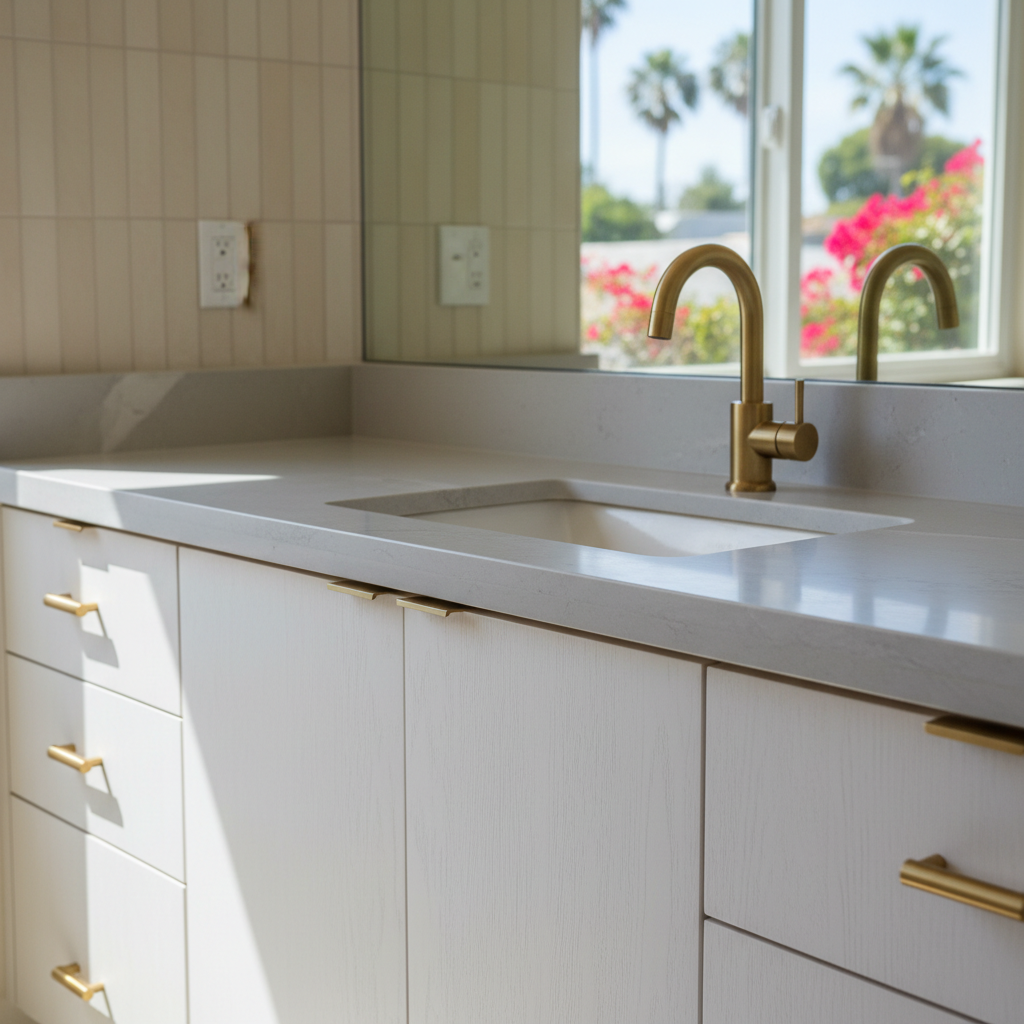
So, you're ready to upgrade your bathroom vanity. Maybe that old pedestal sink just isn't cutting it anymore, or you need more storage in your compact WeHo apartment. It's a common project, and a lot of folks wonder if they can do it themselves or if it's a job for a professional. Let's break it down.
Before You Start: Planning is Key
Don't just rip out the old one and hope for the best. That's a recipe for headaches, trust me. You've got to do some homework first.
- Measure, Measure, Measure: This sounds obvious, but you'd be surprised how many people get this wrong. Measure the width, depth, and height of your current vanity. More importantly, measure the space where the new one will go. Account for door swings, toilet clearance, and any nearby walls or shower enclosures. You don't want a new vanity that sticks out too far or makes your bathroom feel cramped.
- Check Your Plumbing: Take a look under your current sink. Where are the water supply lines (hot and cold) and the drain pipe? Are they coming out of the wall or the floor? This is crucial for choosing a new vanity. Some vanities are designed for specific plumbing configurations. If your new vanity's sink basin is in a completely different spot than the old one, you might be looking at some significant plumbing alterations, and that usually means a pro.
- Consider the Weight: If you're going for a heavy stone top or a wall-mounted vanity, you need to know if your wall can support it. Most standard drywall over wood studs is fine for a typical cabinet, but a big, heavy piece might need extra blocking in the wall. This is especially true for older homes around the Sunset Strip where some framing can be a bit... unique.
- Tools and Materials: Do you have the right tools? Wrenches, a level, a drill, caulk gun, tape measure, maybe a jigsaw if you need to cut for plumbing. You'll also need supplies like plumber's putty, silicone caulk, P-trap assembly, supply lines, and possibly shut-off valves. Make a list.
The DIY Zone: What You Can Probably Handle
For many homeowners, especially if you're replacing a vanity with something similar in size and plumbing configuration, you can definitely tackle parts of this project yourself.
- Demolition: Removing the old vanity and sink is often pretty straightforward. Turn off the water at the shut-off valves under the sink (or the main house shut-off if you don't have them). Disconnect the supply lines and the P-trap. Cut any caulk around the old vanity, and then carefully remove it. Be ready for some dust and maybe a little water.
- Cabinet Installation: If you're installing a freestanding vanity cabinet, it's usually just a matter of leveling it and securing it to the wall studs. Use shims if your floor isn't perfectly level (and let's be honest, in older WeHo homes, perfect floors are rare). Make sure it's plumb and level before you screw it in.
- Sink and Faucet Installation: Installing the sink basin into the countertop (if it's a separate piece) and then installing the faucet is often manageable. Follow the manufacturer's instructions carefully. Use plumber's putty for the drain assembly and silicone caulk for sealing the sink to the countertop.
- Connecting the P-Trap and Supply Lines: Reconnecting the drain P-trap and the new supply lines to the faucet and shut-off valves is also a common DIY task. Hand-tighten connections first, then give them a quarter turn with a wrench. Don't overtighten, or you'll crack something.
When to Call a Pro: Don't Be Afraid to Ask for Help
Look, there's no shame in knowing your limits. Sometimes, trying to save a buck ends up costing you more in repairs or headaches. Here's when you should absolutely bring in someone like us at West Hollywood Bathroom Solutions.
- Plumbing Relocation: If your new vanity requires moving the water supply lines or the drain pipe in the wall, that's a job for a licensed plumber. Messing with in-wall plumbing can lead to leaks, water damage, and big repair bills.
- Electrical Work: Are you adding new lighting, outlets, or moving existing electrical boxes? Electrical work should always be handled by a qualified electrician to ensure safety and code compliance.
- Wall-Mounted Vanities on Tricky Walls: While some wall-mounted vanities are simple, if you're dealing with a heavy unit on a wall that might not have adequate support, or if you're not confident in finding studs and reinforcing properly, a pro can ensure it's securely mounted and won't come crashing down.
- Custom Installations or Complex Designs: If you've got a unique design, a very large or unusually shaped vanity, or if you're integrating it with custom tile work, a professional installer has the experience to make it look seamless and function perfectly.
- Anytime You Feel Overwhelmed: Honestly, if you read through the DIY steps and your gut tells you it's too much, just call. It's better to pay for peace of mind and a job done right than to struggle through it and end up with a leaky sink or a crooked vanity.
A new vanity can really transform your bathroom. Whether you DIY parts of it or have us handle the whole thing, taking the time to plan and knowing when to get expert help will make sure your project is a success.